
So you’re planning your ABC trek. You’re deep in the research, looking at maps, and one name keeps popping up: Poon Hill. It’s billed as a must-do, a sunrise spectacle. But then you look at the map and see a fork in the road. The classic route swings west to include it, adding a day and a pretty serious set of stairs. The other route pushes more directly north, toward the sanctuary itself. A practical question forms in your mind. If I skip Poon Hill, am I missing the whole point? The short answer is no. You are not missing the point. You are simply choosing a different, and in many ways purer, version of the story.
Poon Hill: The Stunning Prologue
First, it’s fair to understand what Poon Hill offers. It’s a famous viewpoint, a separate hill you climb in the dark to watch the sun illuminate Dhaulagiri and the Annapurna range. The photos are incredible. It’s a communal experience, shared with dozens of other hopeful trekkers huddled in the cold. It is, without a doubt, a spectacular prologue. But a prologue is not the main story. Choosing the direct route means you are trading this one, iconic sunrise for something else entirely. You are trading a grand, sweeping preview for a more intimate and immediate immersion into the journey’s core.
The Direct Route: A Different Kind of Magic
Opting for the path that heads straight up the Modi Khola valley, often starting from Kimche or via Ghandruk, changes the character of the trek in subtle but meaningful ways. The energy shifts from chasing a famous dawn viewpoint to settling into the steady rhythm of the walk itself.
A Softer Start: You bypass the steep, stair filled climb to Ulleri that is part of the Poon Hill approach. Your legs will thank you, especially in the early days.
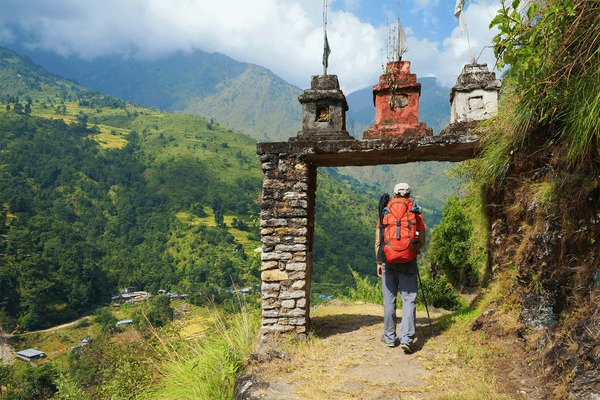
Immediate Immersion: This route plunges you straight into the rich, green heart of the trek. You are immediately among terraced farms, lush forests, and the powerful sound of the river. The focus becomes the walk, the changing forest, the small villages, and the growing anticipation of the mountains ahead.
A Quieter Trail: While never empty, the direct route often feels less crowded than the Poon Hill branch, especially in the initial days. This allows for a more peaceful connection with the landscape.
You lose a wide-angle postcard view, but you gain a deeper sense of being inside the landscape from the very beginning. The mountains reveal themselves more slowly, more personally, as you climb.
What You Gain by Skipping It
The most compelling argument for the direct route is about time and intention. Skipping Poon Hill typically trims a full day off the trek. For someone with limited vacation time or who prefers a more streamlined journey, this is a huge advantage. That saved day can be repurposed. It can be:
An extra acclimatization day in Chhomrong or Deurali, making your final push to Annapurna Base Camp safer and more enjoyable.
A leisurely exploration of a beautiful village like Ghandruk, spending an afternoon learning about Gurung culture instead of rushing through.
Simply a buffer for fatigue or bad weather, reducing schedule pressure.
You are exchanging a single, spectacular hour on a crowded hill for a full, valuable day of rest or deeper exploration elsewhere on the trail. For many trekkers, that is an excellent trade.
The Heart of the Matter: The Sanctuary Itself
Here is the ultimate truth. The emotional core of the Annapurna Base Camp trek is not Poon Hill. It is the moment you walk into the Annapurna Sanctuary. That experience, of being completely surrounded by those towering, silent walls of ice and rock, is what people carry with them for a lifetime. That moment is unchanged, whether you visited Poon Hill or not.
The direct route reframes the entire trek as a focused journey toward that singular destination. Everything builds toward it. The forests, the villages, the bridges, all feel like chapters leading you inevitably to that final, breathtaking amphitheater. The reward feels earned through direct effort, not through a scenic detour. You still get every bit of the main event, the Base Camp itself, in all its humbling glory.
So, is it still worth it?
Absolutely. Choosing the Annapurna Base Camp trek without Poon Hill is not choosing a lesser trek. It is choosing a different narrative. It’s for the trekker who prefers a deep dive over a wide survey, who values a gentle start and a flexible schedule, and who understands that the story’s most powerful moment is still waiting for them, right in the heart of the sanctuary. You aren’t missing the highlight. You are just taking the most direct path to the biggest one of all.