Most people imagine the Everest region through its biggest sights. They picture Mount Everest, huge glaciers, and long mountain ridges.
But a trek is rarely remembered only for the famous views.
It is often the small things that stay with you: the first warm drink after a cold morning, the sound of a river below a suspension bridge, a quiet village waking up, or the feeling of taking off your boots after a long day.
The Everest Base Camp Trek With Helicopter Return creates plenty of these simple moments while giving travelers a different way to finish the journey.
The First Morning Feels Different
Mountain mornings have their own rhythm.
You wake early, pack your things, and step outside into cool air. The village may still be quiet while the first light touches the surrounding hills.
There is no rush to get back to normal city life.
Breakfast Becomes Part of the Adventure
A simple breakfast can feel surprisingly satisfying before a long walk.
A hot bowl of porridge, eggs, toast, or another warm meal gives you a chance to sit down and prepare for the day.
Outside, the mountains are waiting.
That contrast between a simple meal and a huge landscape is one of the pleasures of trekking.
Bridges Turn Into Little Milestones
Suspension bridges are common along the Everest route.
Some stretch across deep valleys with rivers far below. They may move slightly as people cross, which can make the first few crossings exciting.
Look Down Only When You Feel Comfortable
Crossing a bridge is not a race.
Keep a steady pace and follow the normal trail rules. Let other people pass when appropriate.
Once you reach the other side, you may realize that the bridge itself became one of the day’s most memorable moments.
The Sound of Running Water
Mountain rivers are never far from many sections of the trail.
You may hear rushing water before you can see it.
The sound follows the trail as you climb through valleys and cross bridges.
A Natural Background Soundtrack
There are no traffic horns or city crowds in many parts of the route.
Instead, you hear water, wind, footsteps, bells from passing animals, and conversations between trekkers.
Sometimes the quiet is just as impressive as the mountains.
Tea Stops Feel Better at Altitude
A short break at a mountain tea house can completely change your mood.
After walking uphill in cold weather, sitting down with a hot cup of tea feels like a small reward.
Simple Comforts Become Important
At home, you might not think twice about a hot drink.
On a high mountain trail, it can become something you genuinely look forward to.
The same is true for a warm room, dry socks, or a comfortable chair.
Trekking changes your idea of what counts as luxury.
Animals Are Part of the Trail
The Everest region is not only shared by trekkers.
You may see yaks and other pack animals carrying supplies along mountain paths.
They are an important part of transportation in areas where roads are limited.
Give Animals Enough Space
If animals are approaching on a narrow trail, move to a safe side and allow them to pass.
Do not stand in their path for photographs.
A little awareness helps keep both visitors and animals safe.
The Sound of Prayer Wheels
In villages and near religious sites, prayer wheels can become a familiar part of the route.
You may pass one without thinking much about it at first.
Later, after seeing them repeatedly, you begin to notice how closely local culture is connected with the landscape.
Travel With Curiosity
You do not need to understand every local tradition before visiting.
But you should take time to learn.
Ask your guide questions. Listen to explanations. Observe how local people behave around religious places.
That turns a sightseeing trip into a richer travel experience.
Mountain Weather Can Change Your Day
A clear morning does not guarantee a clear afternoon.
Clouds can move across the mountains quickly. Wind may become stronger, and temperatures can drop.
This is normal in a high mountain environment.
Keep Your Important Gear Easy to Reach
A rain jacket should not be buried at the bottom of your bag.
The same goes for gloves, warm layers, sunglasses, and water.
Keeping useful items close saves time when the weather changes.
Small preparation choices can make a big difference after several hours on the trail.
The Quiet Gets Deeper Higher Up
As you climb, the surroundings can become increasingly open and quiet.
There may be fewer trees, fewer buildings, and long stretches of rocky terrain.
You start to notice the size of the mountains more clearly.
Silence Can Be Part of the Experience
At first, silence may feel strange.
Then it becomes relaxing.
You hear your own footsteps and breathing. You see enormous peaks without the noise of a busy city around you.
These quiet sections can be some of the most peaceful moments of the entire trip.
Your Body Becomes Part of the Story
High-altitude trekking teaches you to pay attention to your body.
A normal walking speed may suddenly feel too fast. Stairs can leave you breathing heavily. A small hill may take longer than expected.
The answer is not to fight your body.
Slow Down Without Feeling Guilty
Everyone responds to altitude differently.
There is nothing impressive about pushing through serious symptoms just to stay ahead of another trekker.
Walk at a sensible pace and communicate with your guide if something does not feel right.
A successful trek is one where you return safely, not one where you prove how fast you can walk.
The First View of Everest Can Surprise You
Eventually, the mountain views become bigger and more dramatic.
Seeing Everest for the first time can be exciting, but the moment may not happen exactly as you imagined.
Clouds can hide peaks. Other mountains may dominate the view.
Keep Looking Beyond the Famous Peak
Everest is only one part of the Himalayan landscape.
Ama Dablam, Lhotse, Nuptse, and many other peaks create an enormous backdrop.
Sometimes another mountain becomes your favorite view of the day.
That is part of the fun.
Base Camp Feels Different After Days on Foot
When you finally reach Everest Base Camp, the location carries the weight of everything that came before it.
You remember the early mornings, steep climbs, cold weather, bridges, villages, and long walking hours.
The destination feels earned.
Pause Before You Leave
Take a few moments to enjoy the surroundings.
Photographs are useful, but they cannot capture the full feeling of standing there after days of trekking.
Look around and remember the journey that brought you there.
The Return Becomes a Flight
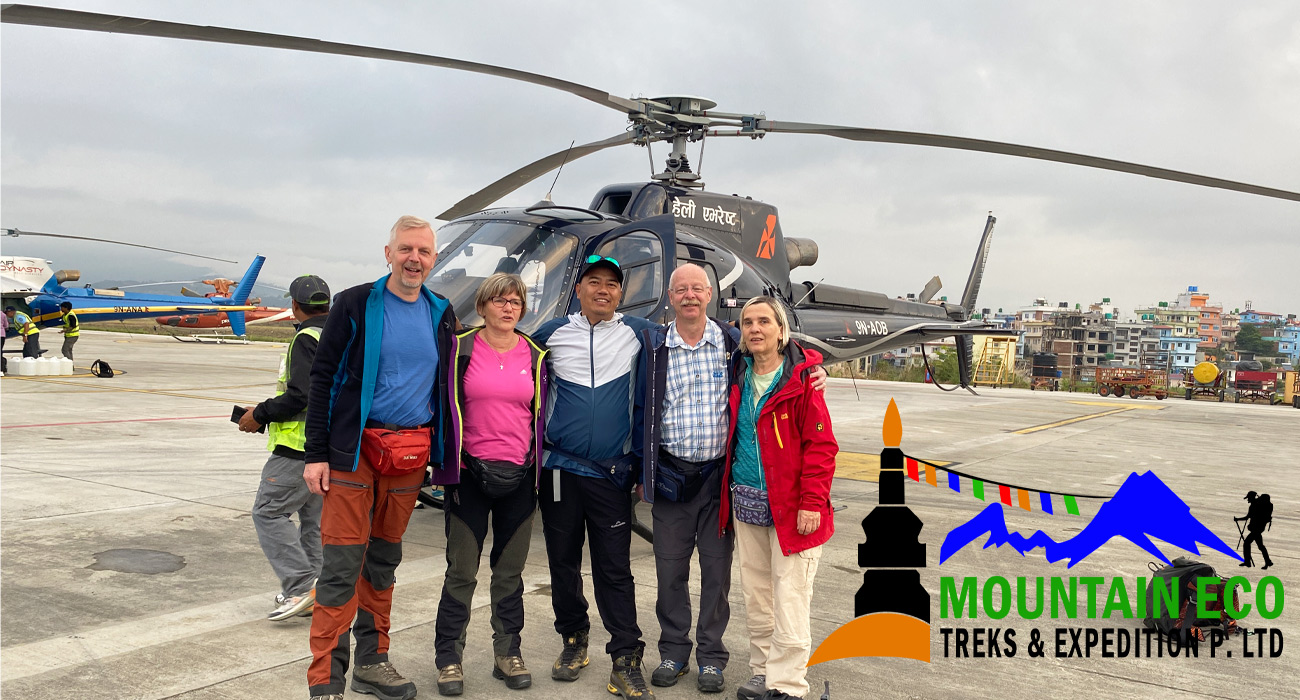
The Everest Base Camp Trek With Helicopter Return offers a very different ending after the walking section is complete.
Rather than spending several days descending along the same route, travelers can return by helicopter when weather and operating conditions allow.
The change can feel almost unreal.
Watch Familiar Places Shrink Below
From the trail, a village can seem far away and difficult to reach.
From the helicopter, it becomes a small collection of buildings surrounded by enormous mountains.
The trail you walked for days becomes easier to understand as one connected route.
It is a powerful final look at the region.
Why These Small Moments Matter
A photograph of Everest may be impressive, but memories are often built around ordinary moments.
A shared laugh at breakfast. A quiet rest beside the trail. A friendly greeting from a local resident. The sound of boots on a rocky path.
These experiences make a trek feel personal.
The Everest Base Camp Trek With Helicopter Return gives you enough time on the trail to experience these details while offering a faster way to leave the mountains afterward.
The Memories Between the Big Moments
The best trekking memories are not always the ones you planned.
Sometimes they come from a cup of tea, a cold morning, a bridge over a rushing river, or a few minutes spent watching clouds move around a mountain.
The Everest Base Camp Trek With Helicopter Return brings together these small experiences with the major achievement of reaching Base Camp.
You walk into the Himalayas slowly, one day at a time. Then you leave with a view from above that puts the entire adventure into perspective.
That mix of simple moments and unforgettable scenery is what can make the journey stay with you long after you return home.
Frequently Asked Questions
What small experiences should trekkers look forward to?
Local meals, village walks, mountain views, tea breaks, suspension bridges, quiet trails, and conversations with other travelers can all become memorable parts of the journey.
Is the trek tiring?
Yes. Long walking days and increasing altitude can be physically demanding. Proper preparation and a steady pace are important.
Can I take photographs throughout the trail?
Yes, but always stay aware of the path and surroundings. Ask permission before photographing local people closely.
Does the helicopter return change the trekking experience?
It changes the final part of the journey by replacing the long return walk with an aerial trip over the Everest region.
Can the helicopter flight be affected by weather?
Yes. Mountain weather can change quickly, so flight timing depends on safe conditions.